Texas Supreme
The only product in our lineup with built-in padding, a 90 oz face weight, and the softest blade shape the manufacturer makes. This is the one clients pick when they touch the samples.
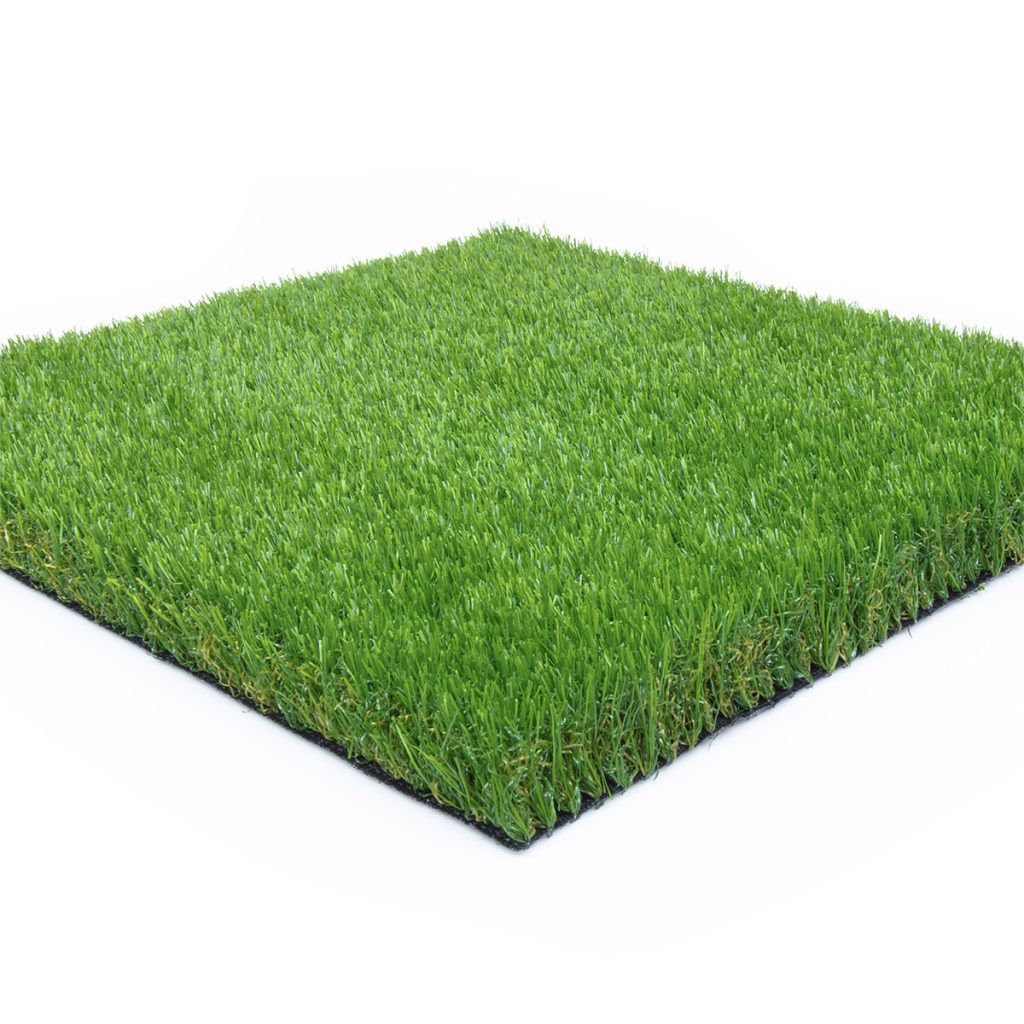
Texas Supreme is our premium landscape turf at $14 to $15 per square foot installed, with a 90 oz face weight, a softer C-shape blade and 5 mm of integrated padding. It is the one to pick when how it feels underfoot matters more than what it costs.
Specified across the Austin metro for barefoot spaces, pool surrounds and high-traffic family yards. Compare against Hill Country Blend, the default for a typical backyard.
The Premium Grade for Barefoot Priority and Heavy Traffic
Texas Supreme is the premium product in our three-blend lineup. It runs a 90 oz face weight, which is double the Cen-Tex Blend and 64% heavier than the Hill Country Blend, and it is the only one with 5 mm of integrated padding underneath the pile.
The manufacturer built it to replicate the look and feel of Pacific coastline turf: thick, resilient, saturated in color. The C-shape blade replaces the Mini Wave found in our other two products, which makes it noticeably softer under bare feet.
Spec this one for families with young kids, high-traffic backyards, pool surrounds, and any client whose first question is about how it feels rather than what it costs.
Inspect the Sample
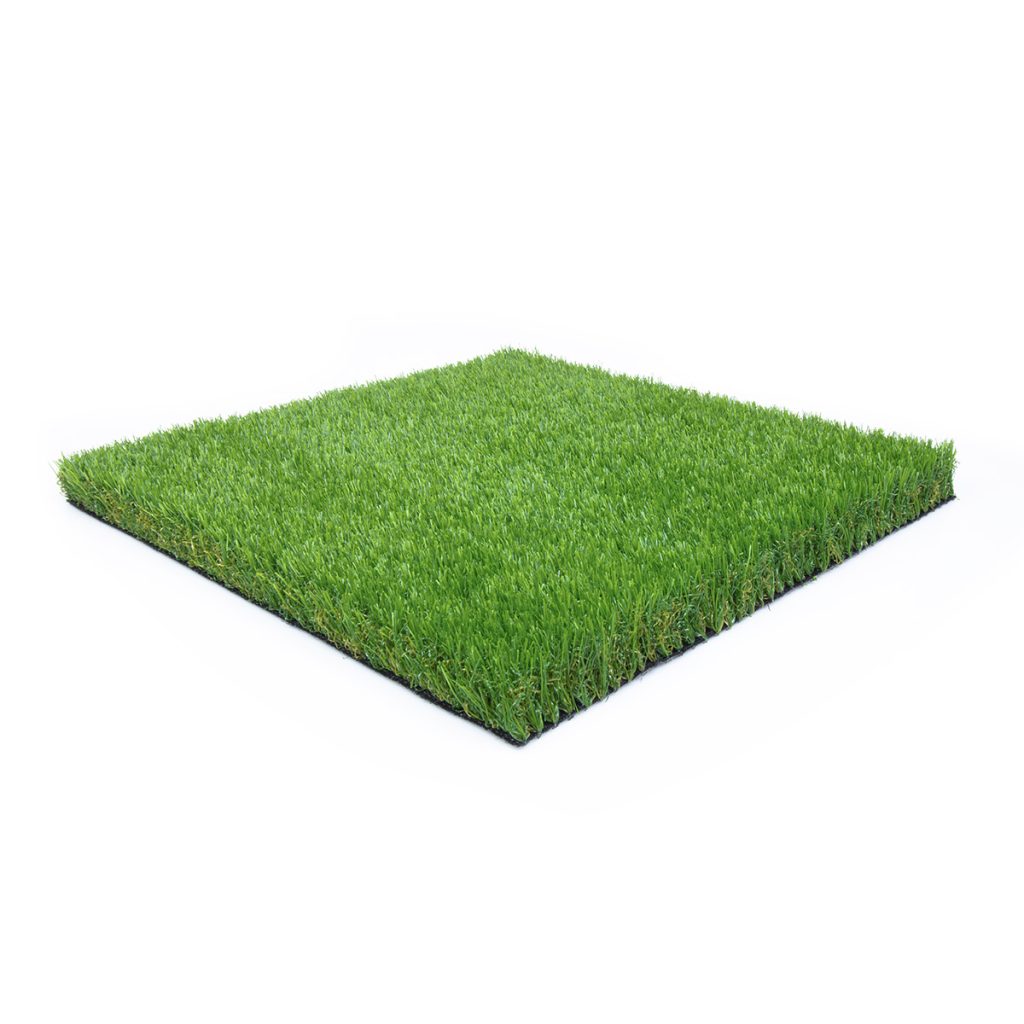
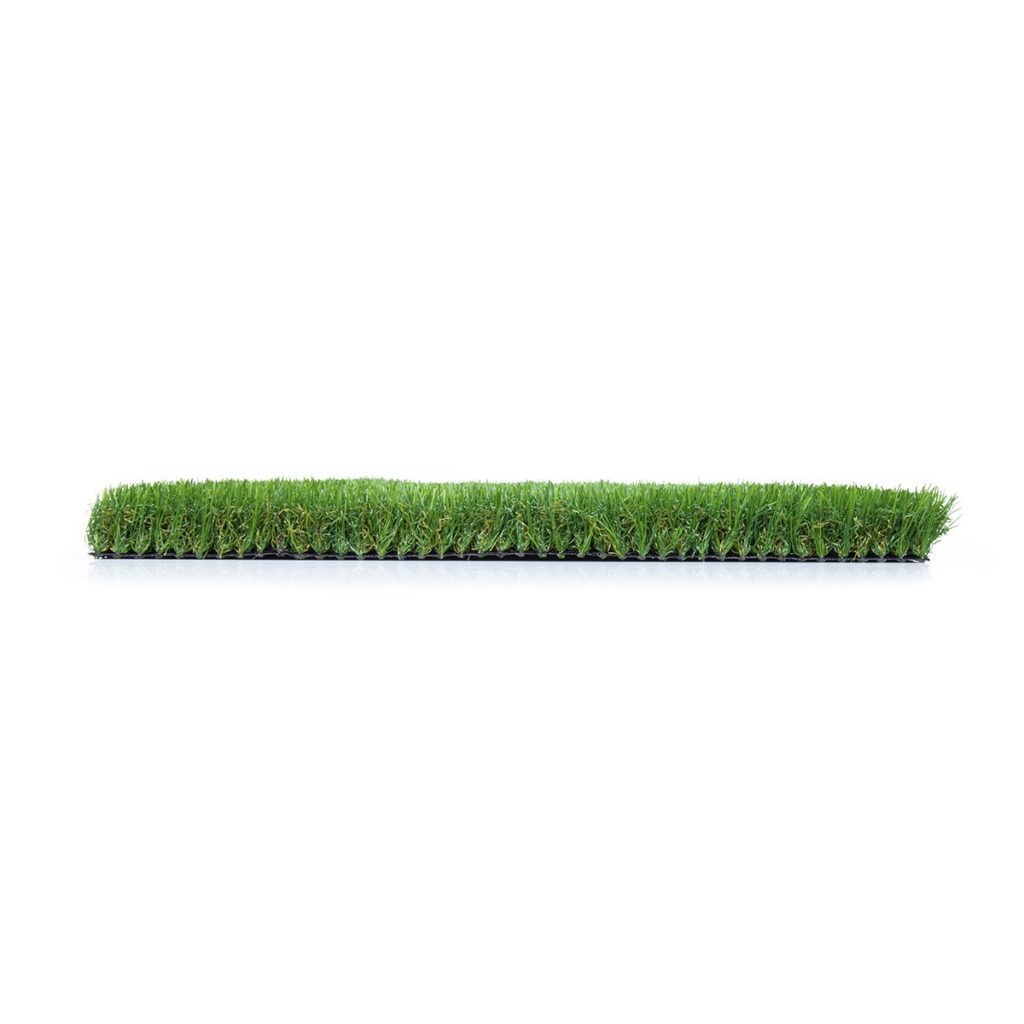
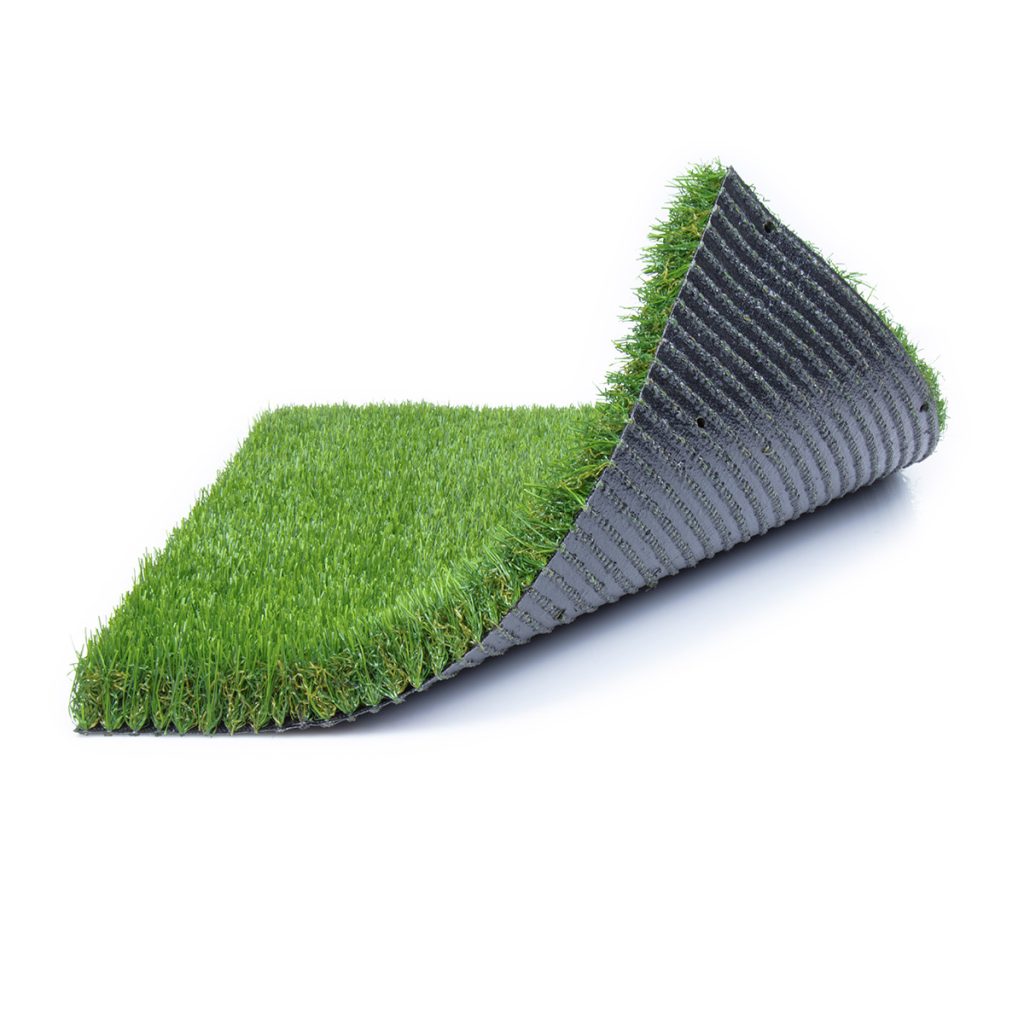
Four supplier reference shots of Texas Supreme. Same reel we cut from on install day.
Texas Supreme Specs
| Pile height | 1 3/8 in |
|---|---|
| Face weight | 90 oz / sq yd |
| Total weight | 117 oz / sq yd |
| Blade shape | C shape |
| Padding | 5 mm integrated |
| Yarn color | Field green / olive green |
| Thatch color | Brown / green |
| Face composition | Polyethylene (PE) monofilament |
| Thatch material | Texturized polypropylene (PP) |
| Primary backing | 27 oz, two-layer polyurethane |
| Stitch gauge | 3/8 in |
| Drain rate | 30+ inches per hour |
| Roll width | 15 ft |
| Warranty | 15 years |
Why 90 Ounces Actually Matters
Face weight is the single most useful number for comparing turf quality. Most premium residential goods sit between 70 and 90 oz. Below 50 oz is entry-level. Ninety is at the top of the residential landscape range.
Blades hold each other up
In a low-density turf, the infill does most of the work of keeping fibers vertical, which is why cheap turf lays flat once traffic starts. At 90 oz the fibers support each other. Recovery after footfall comes from the turf itself instead of from sand.
Less infill required
Dense turf with a short pile needs less infill per square foot to stand up. That partially offsets the higher material cost, and it is a real dollar figure to include in the estimate rather than a talking point.
Looks manicured, not wild
Combining a 1 3/8 in pile with a 90 oz face weight produces something closer to a golf-course fringe or a well-kept resort lawn than an unmown residential lawn. Some clients want exactly that look. Others want a natural-lawn feel, and Hill Country Blend is the better steer for them. We put both samples in your hands during the walk-through.
What the Integrated Pad Actually Does
None of our other products have this layer. It is the differentiator on family jobs and on any space where a client is likely to lie down on the lawn.
Cushion underfoot
Softens footfall on hard sub-bases. Noticeable the moment you step off a paver onto the turf.
Softer landing on falls
Kids fall on backyards. The pad takes some of that impact out of the equation.
Thermal separation from the base
Adds a layer between the surface and the compacted base beneath it, which helps the turf stay cooler on hot afternoons.
What this padding is not
This is comfort padding, not a rated fall-height safety system. Playground turf that carries a critical-fall-height certification is a different product category tested under ASTM standards. We do not market this product with that certification and we will not imply it during a sales walk-through. “Softer landing” is a fair description. “Safety-rated for playground equipment” is not.
The C-Shape Blade, and Why It Runs Cooler
C-Shape Blade, Softest in the Manufacturer’s Range
The manufacturer scores this blade at 98% softness, 90% durability, 95% rigidity on their comparison scale. That five-point drop in durability against Mini Wave is more than covered by the 90 oz face weight. A softer blade at twice the density outlasts a harder blade at half the density under the same traffic.
Best light and heat deflection of any blade shape in the line
The rounded geometry delivers the truest color, the least glare, and the least sheen of any blade shape the manufacturer makes. On a product this dense, that matters, because density plus sheen is what makes turf read as artificial from a distance.
Cooler surface
Airflow through the canopy plus the C-shape’s superior light deflection means this product performs at or above the line’s average on surface temperature. The manufacturer’s third-party testing reports temperatures roughly 15 degrees cooler than average turf under controlled conditions. Frame that as a manufacturer claim, not a promise for any specific July afternoon.
Least likely to mat
Matting is the failure mode homeowners actually experience and the one the warranty explicitly does not cover. Ninety ounces of face weight plus a 5 mm pad resists crush better than anything else we sell. The warranty language reads the same as any 15-year competitor at 60 oz. The odds of ever needing it are not the same.
Drainage
30+ inches per hour through the same punch-hole backing used across the line. Integrated padding plus very high density puts more material in the profile, so base preparation and slope matter more here than on a thinner product. Our crew does not get lazy on compaction under this one.
Honest Application Guide
Good Fits
- Families with young kids
- Barefoot-priority spaces: pool surrounds, patios, outdoor living rooms
- High-traffic backyards
- Households replacing a lawn that failed under tree shade and want the upgrade
- Anyone who touches the three samples and immediately picks the softest one
- Smaller square footages where the price difference is absorbable
Weaker Fits
- Very large square footages on a tight budget. Choose Cen-Tex Blend or Hill Country Blend.
- Clients who want an unmanicured, natural-lawn look. The density and short pile read too uniform for that brief.
- Rooftop or elevated-deck installs where load capacity is constrained. Total weight here is roughly 0.81 lb per square foot before infill, versus 0.57 for Hill Country Blend. Confirm with the structural engineer before spec.
The Fifteen-Year Coverage, in Plain Terms
What is covered
Substantial change to the turf area or pile height loss of 50% or more within 15 years, caused by ultraviolet degradation. Replacement material only.
How it prorates
100% coverage in years 0 through 8. 50% coverage in years 8 through 12. 25% coverage in years 12 through 15.
What is not covered
Labor to remove and reinstall the failed turf. Matting, regardless of cause. Pile crushing. Damage from improper cleaning, chemical spills, reflected light from window glare, and invasive growth including nutgrass and nutsedge. Slight color change over the life of the product, which is expected. Shipping damage, which is a freight-carrier claim. Any install not performed by a professional installer.
How to claim
Claims must be submitted in writing to the manufacturer. Delivery defects and shortages have to be reported within 30 days of delivery. The warranty is not automatically transferable on a home sale. Liability caps at the invoice price of the turf.
Compare Blends
Cen-Tex Blend
Entry-grade with a 45 oz face weight and a 5-year warranty. Right pick for large square footages, curb-appeal areas, and low-traffic zones where budget drives the decision.
$9 to $11 per sq ft →Hill Country Blend
Mid-tier with a full 15-year warranty and a 55 oz face weight. The default recommendation for a typical Austin backyard, and endorsed by an Austin-market installer as the best pick for hot climates.
$11 to $13 per sq ft →What People Ask About Texas Supreme
What does the 5 mm integrated padding do?
It changes how the turf feels underfoot and how it cushions a fall, which is why it suits play areas and barefoot spaces. It does not lower surface temperature. Nothing does, in full Texas sun.
Why does 90 oz face weight matter?
Face weight is the most useful single number for comparing turf. Most premium residential goods sit between 70 and 90 oz. At 90 the fibers support each other rather than relying on infill to stand up, so recovery after footfall comes from the turf itself.
Does it need less infill?
Yes. A dense face with a short pile needs less infill per square foot to stand up, which partially offsets the higher material cost. It is a real line on the estimate rather than a talking point.
Is it worth it over Hill Country Blend?
If your first question is how it feels rather than what it costs, yes. Both carry the same 15-year warranty. Texas Supreme adds density, the softer C-shape blade and the pad. We put both samples in your hands during the walk-through.
How much does it cost installed?
$14 to $15 per square foot, turnkey. Full breakdown in the cost guide.
Get a Fixed Quote for Texas Supreme
Walk-through takes 15 to 20 minutes on-site. We bring samples of all three blends. Feel this one last so it is the sample still in your hand when the conversation is over.