Artificial Turf Installation in Cedar Park
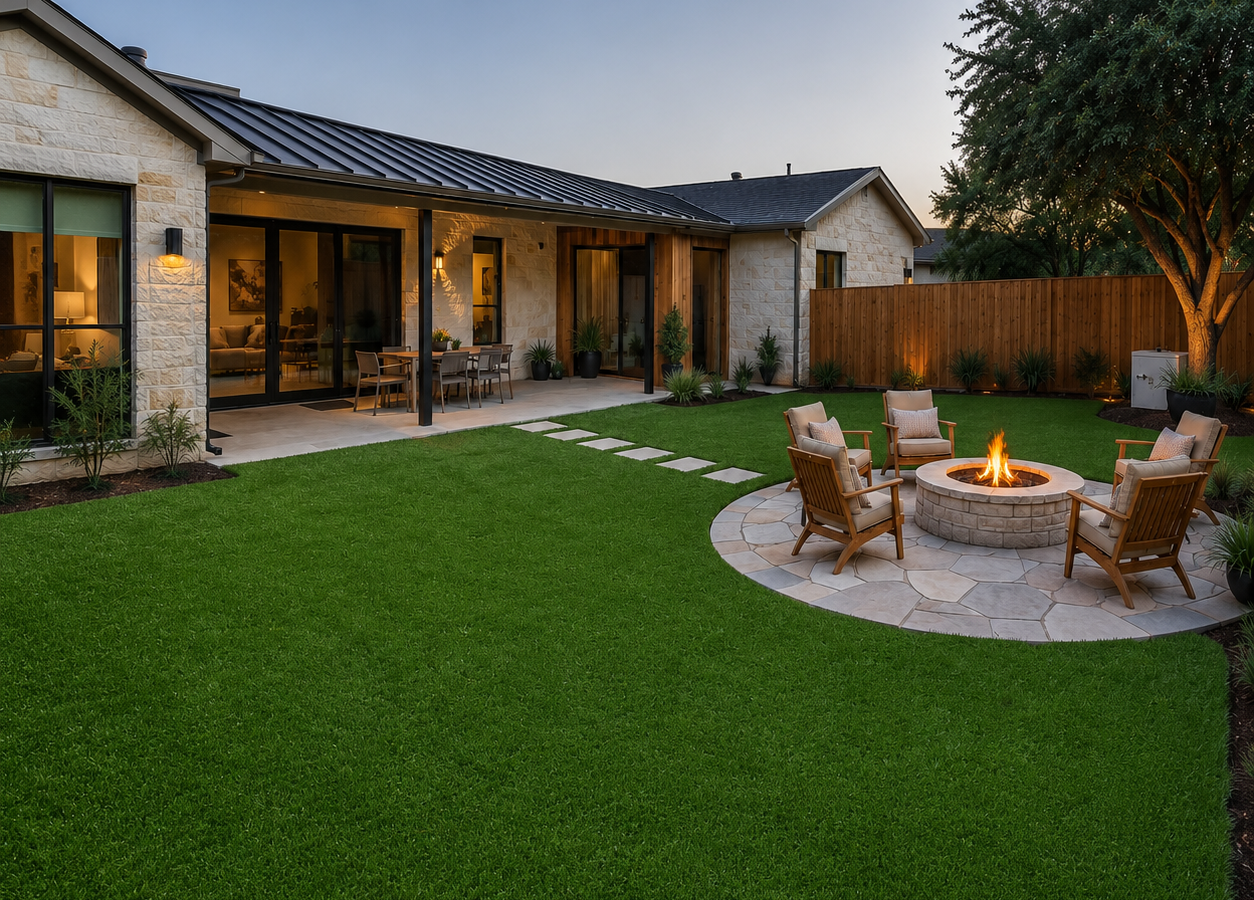
Artificial turf gives Cedar Park families a full green yard every month of the year, with no mowing, no fertilizer, no sprinkler bill, and no calendar to memorize just to water the grass. That last part matters right now: Cedar Park is on Stage 3, so most yards get one short watering window a week, and living grass cannot hold up on that. Turf can.
The Water Situation Made the Decision for Most Homeowners
Cedar Park’s drinking and irrigation water comes from Lakes Travis and Buchanan through the LCRA. Both lakes have been below the trigger thresholds long enough that the city stepped into Stage 3 conservation, and enforcement has been active since March 31, 2026. Most Cedar Park addresses now get one designated watering day per week. Wednesday for addresses ending in 1 or 3. Thursday for 4, 6, or 8. Saturday for 5, 7, or 9. Sunday for 0 or 2. Hand watering with a shut-off nozzle is allowed any day before 10 a.m. or after 7 p.m., and drip irrigation stays legal in the same window.
Bermuda grass wants roughly one inch of water per week through a Central Texas summer. St. Augustine wants closer to an inch and a quarter, and it wants it split across two shorter cycles rather than one long one. Neither of those irrigation profiles is legal in Cedar Park right now, and neither is coming back on the schedule Bermuda needs before August ends.
That is the honest reason turf is having a moment here. It is not because it is trendy. It is because the alternative failed. A yard that browned out in July and cannot be revived until the LCRA calls off Stage 3 is a yard the homeowner would rather look at green.
One thing we do not do: claim the Cedar Park rebate applies to artificial turf. It does not. The WaterWise program pays up to $2,000 to convert grass to native beds and drought-tolerant plants, and LCRA’s WaterSmart program stacks on top for soil tests, irrigation upgrades, and mulch. Neither covers synthetic turf. If a competitor tells you it does, get that in writing before you sign anything.
Cedar Park Neighborhoods and Subdivisions
Cedar Park is a neighborhood city. Almost every homeowner here lives in a named subdivision, and each one has its own yard footprint, HOA posture, and typical failure mode for natural grass. Here is where we install and what tends to come up on the walk-through.
Ranch at Brushy Creek
Master-planned community of roughly 1,300 homes built between 2005 and 2022 by nine different builders. Lot sizes vary widely across the phases. Back yards tend to be modest, front yards are the visible surface, and the HOA has an architectural review process that will want to see the turf spec before installation. We provide the manufacturer spec sheet and product photos for submissions.
Twin Creeks and Twin Creeks Country Club
Late-1990s and early-2000s development around the Fred Couples-designed golf course. Lots run generous, mature oak coverage is common, and Bermuda struggles in the shaded pockets between trees. This is where we most often spec Hill Country Blend for the sun-exposed back yard and shift to a shade-tolerant install approach under the oak canopy.
Buttercup Creek
Older Cedar Park subdivision with a heavy live oak canopy and rocky soil that makes deep-rooted Bermuda a losing battle. Front yards here often show the pattern of dead grass rings under trees that no amount of watering will fix. Turf transitions cleanly around root flares and eliminates the ring.
Carriage Hills, Bella Vista, Breakaway Park
Established subdivisions with active HOAs and traditional front-yard expectations. Realism matters more than raw square footage here. Hill Country Blend’s tall pile and dual-tone thatch reads as a well-kept residential lawn rather than a putting green.
Cypress Bend, Cedar Grove, Forest Oaks, Heritage Park, Coventry Crossing
Standard mid-density Cedar Park subdivisions with typical suburban lot sizes. Most jobs here are back-yard replacements paired with a pet run or a play zone. Front yards get done second, once the homeowner sees how the back turned out.
Cedar Park Town Center and adjacent newer builds
Smaller lot sizes, higher-density planning, and often no back yard at all in the townhome sections. Where there is a yard, it is a candidate for full replacement rather than partial. Roof-top and patio installs are increasingly common in the mixed-use blocks near the town center.
Local Landscape Realities
Shallow soil over limestone
Cedar Park sits on the eastern edge of the Edwards Plateau. Topsoil is thin, often four to six inches over caliche and limestone bedrock. That is why irrigation runoff is a real problem here and why xeriscape works so well. It is also why our base prep on turf installs uses a compacted decomposed-granite base that can be built up rather than dug down.
The oak canopy problem
Live oaks are the signature tree of Cedar Park, and they cast dense shade year-round. Bermuda needs six-plus hours of direct sun and will not thrive under an oak. Zoysia is a partial fix but still struggles in deep shade. Turf works under oaks because it does not care about light. The one thing to watch is oak-tannin drip staining, and a bi-annual rinse handles it.
HOA culture is real
Twin Creeks, Ranch at Brushy Creek, Carriage Hills, and several other Cedar Park associations have active architectural review committees. Texas Property Code Section 202.007, updated in 2013, protects native drought-tolerant landscaping and water-conserving natural turf from HOA prohibition. Artificial turf is a separate category and is regulated community by community. Associations can still require preapproval, and they usually do. We help homeowners package the submission with spec sheets, product photos, and the planned layout so the review process is a formality rather than a fight.
City landscape ordinance to know
Cedar Park Article 14.07 states that synthetic or artificial lawns and plants cannot be used to satisfy the city’s landscape-requirement plantings. In practical terms this affects new residential development landscape submissions and commercial site development, not established homeowners swapping an existing lawn to turf. If your project is a new build or a commercial property, we work with your builder or GC to make sure the plant-requirement portion is met by natural landscaping while turf handles the amenity areas.
Water bill trajectory
Cedar Park raised water rates in 2024 and again in 2026 to fund infrastructure upgrades and drought-response measures. The direction is one-way, and homeowners on Bermuda are watching their July and August bills climb even under Stage 3 restrictions. A turf install shifts a variable summer expense into a fixed one-time cost.
Product Fit by Situation
Every Cedar Park yard gets samples of all three blends on the walk-through. Here is how we usually steer the recommendation once we see the site.
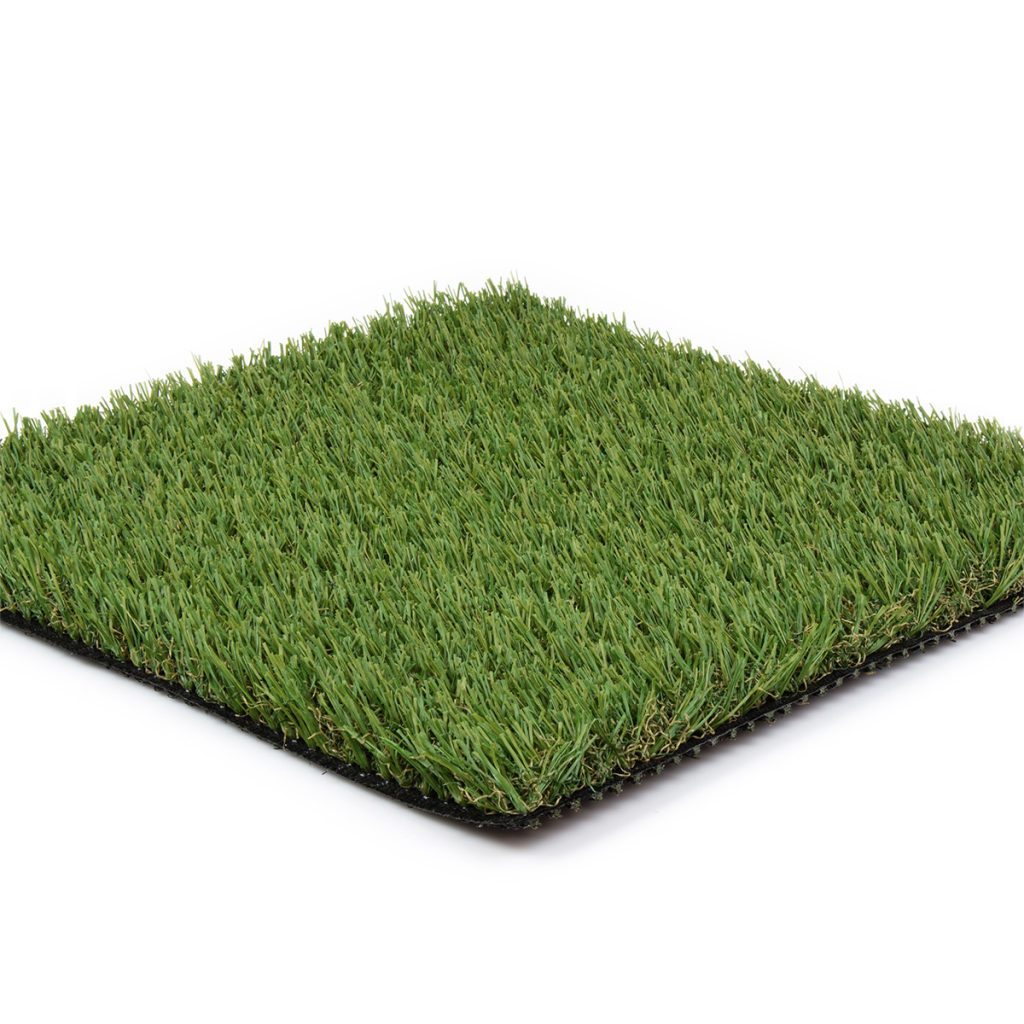
Cen-Tex Blend
Right pick for the deeper front lots in Ranch at Brushy Creek or the parkway strips in Cedar Park Town Center. Curb appeal without the premium price tag. 5-year warranty.
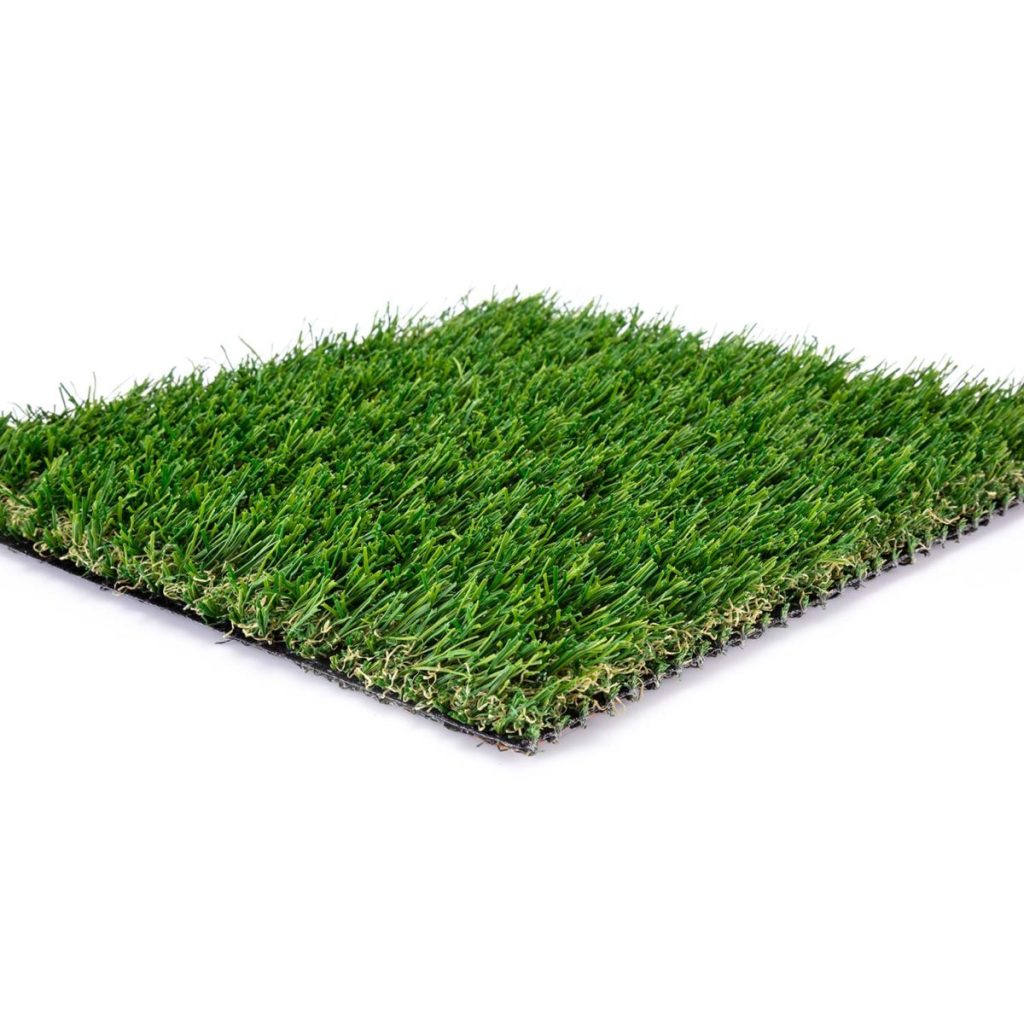
Hill Country Blend
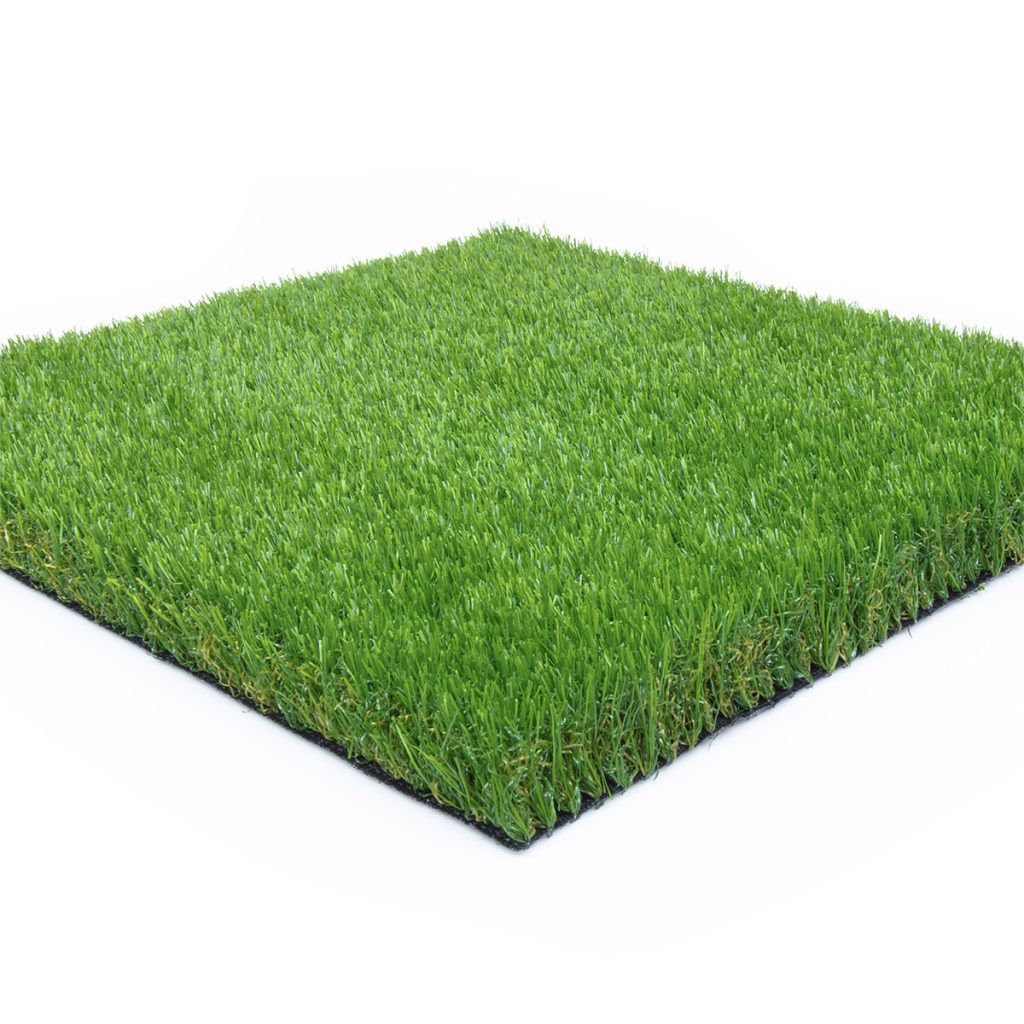
What we recommend on most Cedar Park back yards. Tallest pile in our lineup, full 15-year warranty, and the blend an Austin-market installer publicly named as the best pick for hot climates.
Texas Supreme
For Twin Creeks Country Club-style back yards with a pool surround, or family jobs where the kids will actually roll on the lawn. 5 mm integrated padding and the softest blade the manufacturer makes.
The Local Advantage on Scheduling
Cedar Park is our home city. That has a few practical effects on how a job goes here compared to a farther-out install.
Same-week measure
Owner-run means one calendar for estimates. Cedar Park addresses usually get the on-site walk-through within three business days of the first call, sometimes same day if we are already in the neighborhood.
48-hour written quote
Fixed price after the walk-through. The estimate spells out base prep, blend selection, infill type and rate, edging, and any HOA submission we will prepare on your behalf.
Owner and foreman on the job every day
No subcontractors. John McCormick sets the estimate, runs the install, and does the walk-through. The same crew that shows up on day one is the crew that finishes the job.
HOA submissions handled
If your subdivision requires architectural review approval, we prepare the packet with manufacturer spec sheets, product photos, and a plan drawing. Homeowners in Twin Creeks and Ranch at Brushy Creek get this every job.
What Homeowners Ask on the Walk-Through
Will my HOA in Cedar Park allow artificial turf?
Depends on your specific HOA or community rules. Some Austin-Metro HOAs approve properly-documented artificial turf submissions with preapproval; others prohibit synthetic grass for standard lawns entirely (Wolf Ranch in Georgetown Georgetown are two documented examples). We check your specific community’s covenants and design guidelines on the walk-through and will tell you before quoting the job if artificial turf is not permitted for your address. Texas Property Code Section 202.007 protects native drought-tolerant landscaping. It does not automatically cover artificial turf, which each community regulates on its own. Twin Creeks, Ranch at Brushy Creek, Carriage Hills, and Bella Vista all have architectural review committees that we have worked with before. We prepare the submission packet as part of every install where the HOA requires one.
Does Cedar Park offer a rebate for artificial turf?
No. The city’s WaterWise program pays up to $2,000 to convert grass to native beds and drought-tolerant plants, and LCRA’s WaterSmart stacks on top for soil tests, irrigation upgrades, and mulch. Neither program covers synthetic turf. Any installer who tells you otherwise is either uninformed or overpromising. The financial case for turf in Cedar Park is on water bills, replacement costs, and time, not on rebates.
How does turf handle the summer heat here?
All three of our blends use blade geometries that deflect light and let heat dissipate through the canopy rather than radiate. The manufacturer reports temperatures roughly 15 degrees cooler than average turf under controlled conditions, which we frame as a manufacturer claim rather than a promise for any specific 105-degree Cedar Park afternoon. In practice, turf reads as warm underfoot in direct sun, similar to a wood deck, and it cools to touchable within a minute of a garden-hose rinse. Full pavers and concrete both run hotter than any of our blends do.
What does Stage 3 mean for a turf install schedule?
Stage 3 has zero effect on install schedule or turf performance. Turf does not need to be watered to establish, and it does not need to be watered to survive. It draws on rain when it rains and holds up during drought without help. The only time we recommend a rinse is after heavy pet use or oak-drip staining.
Do you install in the older Cedar Park neighborhoods with heavy oak coverage?
Yes, and Buttercup Creek and Twin Creeks are exactly the yards where turf outperforms every other option. Live oaks cast the kind of dense year-round shade that kills Bermuda and struggles even zoysia. Turf works under oaks because it does not depend on sunlight. The only prep difference is a bi-annual rinse to handle oak-tannin drip staining.
How does the LCRA situation affect my long-term water bill?
Cedar Park raised water rates in 2024 and 2026, and the LCRA has flagged the possibility of further rate increases if Lakes Travis and Buchanan do not recover. Homeowners on Bermuda are exposed to that trajectory. Homeowners on turf are not. The install is a one-time cost. The water savings are permanent.
Book a Walk-Through in Cedar Park
Fifteen to twenty minutes on-site. Written estimate in your inbox within 48 hours. We bring samples of all three blends so the decision is made by hand, not from a photo. HOA submission included where needed.